
Introduction
What Causes Hearing Loss
There are many potential causes of hearing loss, as well as risk factors that can increase your likelihood of developing it. While many people can expect some level of hearing loss as inevitable due to aging, there are other factors that are good to be aware of. Knowing what the most common risk factors are can help you avoid losing your hearing earlier or prevent greater severity of hearing loss.
Some of the factors are internal or biological causes that are more difficult to avoid. However, some of them are more external or environmental causes over which you can have more control.
Risk Factors for Hearing Loss
Common Risk Factors for Hearing Loss
Genetics
For some people, hearing loss can happen due to your genetics. These are people who are more likely to be born with poor hearing, or who have hearing loss much earlier in their lives than most.
Some people may be born with deformations of the ear itself, which can affect how well you hear.
If your family has a history of having earlier and more severe hearing loss than usual, you may have this same risk factor. We recommend that people with a common family history of early hearing loss get their hearing tested earlier and more regularly.
Health Conditions
There are also health conditions that increase the risk of having hearing loss. Conditions like diabetes, some autoimmune disorders, cancer, and other diseases can cause nerve damage in your ears. If you are diagnosed with any disease or health condition that can affect your blood flow, nerves or brain, consult with your doctor. You can ask if your hearing may be affected by your condition. If your doctor says that a medication you take can cause hearing loss, we recommend having your hearing tested annually. This will help stop any hearing loss early and offer intervention options before it gets worse.
Another form of health condition that can cause hearing loss is due to side effects of some medications. Depending on what condition you have, some stronger medications and treatments may cause hearing loss. These can be temporary side effects that will go away once you stop taking the medication. Some, however, can cause permanent damage to your hearing.
Age
The older you get, the more likely you are to have gradual hearing loss. Here is some basic data on how many people have hearing loss by age brackets, according to the Canadian Health Measures Survey (CHMS):
- Ages 20 to 39: 15%
- Ages 40 to 59: 40%
- Ages 60 to 79: 78%
You can see the percentage of population in each age group dramatically increases from early adulthood to senior status. This is due to a combination of things. First, you are more likely to slowly build small instances of damage to your hearing over your lifespan. Second, as you age the inner ear hair cells and nerves become less sensitive due to natural decay over time.
When you are in your 20s, it is recommended that you get a hearing test every 10 years or so, unless you have reason to believe you have some hearing loss already. Once you reach your 50s, we recommend you get your hearing tested every two to three years. Once you have a diagnosed hearing loss, we recommend you get a full hearing test every year.
Loud Noise
A common risk factor for hearing loss is exposure to loud noises. Loud noise can include things like machinery, very loud music, gun shots, and so on. The longer and more often you are exposed to loud noise, the more likely you are to have hearing loss.
That is why many occupations, such as machine workers, police officers, and more are all required to get their hearing screened regularly. It is also recommended that musicians, hunters, and anyone else exposed to loud noises wear proper hearing protection.
Sensorineural Hearing Loss
Decoding Sensorineural Hearing
Sensorineural hearing loss is one of the two main types. It happens when your inner ear components that are necessary for hearing are damaged or deteriorate. Those components include the inner ear hair cells, nerve damage, and so on. You can read more in our full guide to the types of hearing loss.
There are several causes for sensorineural hearing loss, including the following:
Age-related Hearing Loss
The most common cause of hearing loss is presbycusis, or age-related hearing loss. This occurs when the inner ear hair cells deteriorate over time and become less sensitive. Age-related hearing loss most often occurs in both ears, but for some people the level of hearing loss can vary between both ears.
It is a slow progression, and most people will not realize that they have any hearing loss right away. That is why we advise everyone over the age of 50 to get their hearing tested every two years.
The initial sign of age-related hearing loss is losing the ability to hear sounds in higher pitches. This includes speech, where you have greater difficulty hearing someone who speaks in a higher pitched voice (e.g., women, children).
Long-term Exposure to Noise
The second most common cause of hearing loss is due to long-term exposure to loud noise, or sudden exposure to extremely loud noise.
For reference, here is a list of common types of noise and what their average decibel rating can be:

Whispering - 30 dB

Normal conversation - 60 dB

Vacuum cleaner - 70 dB

Dense vehicle traffic - 80 dB

Food blender - 91 dB

Indoor rock concerts - 115 dB

Jet engine - 140 dB
Cardiovascular Disorders
Blood flow is necessary to maintain the health of your inner ear hair cells and nerve sensitivity. This is seen with a few different health conditions related to blood flow that are believed to have links to hearing loss.
One is cardiovascular disease (CDV). Although there has been no direct evidence to show that cardiovascular disease causes hearing loss, there are signs that there is a link. In a 2010 study performed by Hull, R.H., & Kerschen, S. R., it was shown that CVD may reduce blood flow to the ear. The lack of blood flow is what can cause deterioration and damage over time to parts of your auditory system in your inner ear.
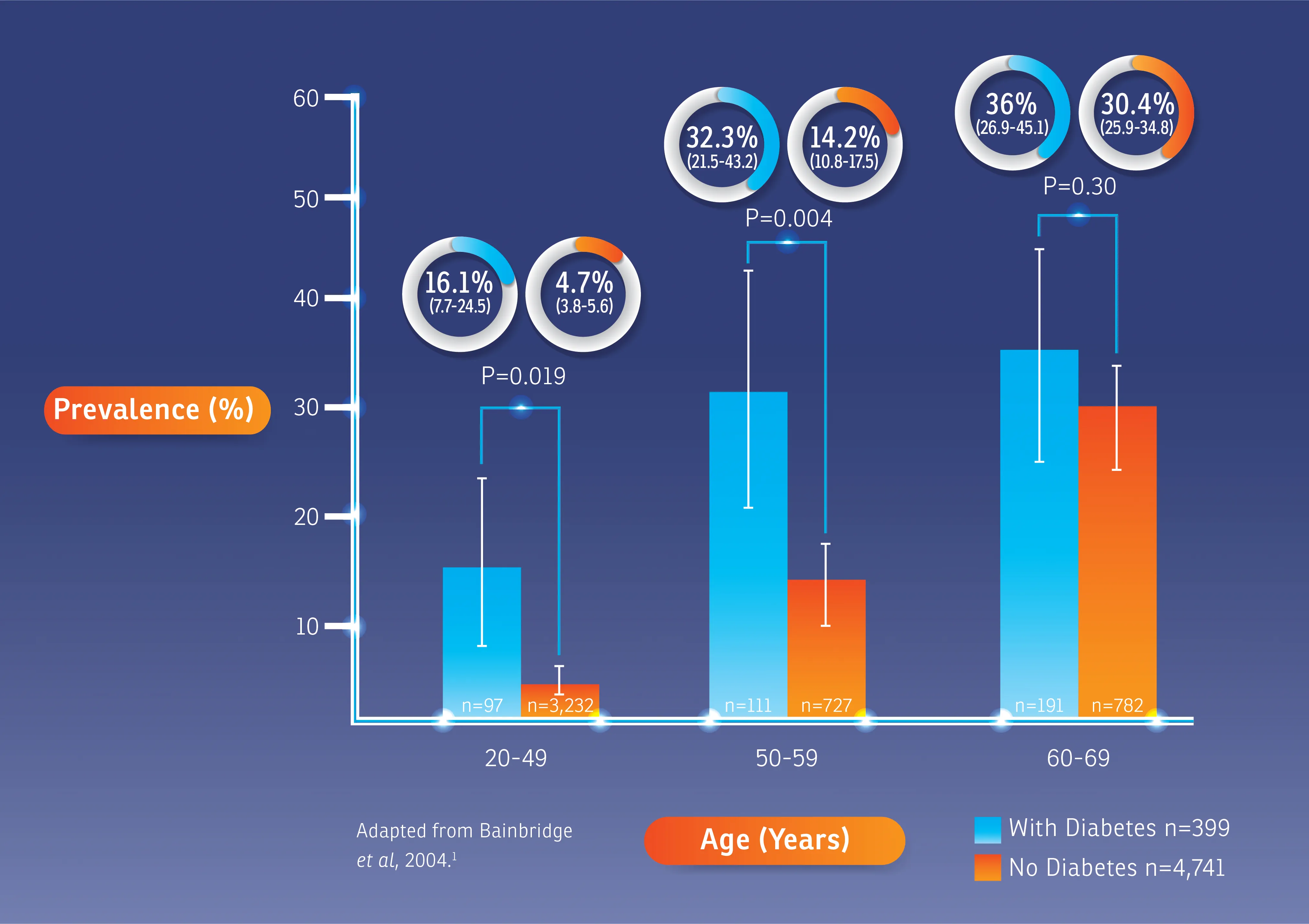
Another big one is diabetes. A research survey conducted in the United States from 1999 to 2004 in more than 5,000 individuals demonstrated a link with hearing loss. 21% of persons with diabetes had a hearing loss, compared to only 9% of persons without diabetes. In fact, the prevalence of hearing impairment among people with diagnosed diabetes statistically exceeded it among those without diabetes in all age groups except those aged 60 to 69.
Ear Infections
Meniere's Disease
Autoimmune Diseases
Causes of Conductive Hearing Loss
Unveiling Conductive Hearing Loss
Conductive hearing loss is the second of the two types of hearing loss. It occurs because something blocks sound from getting through your outer and middle ear and into your inner ear. The blockage can be caused by a foreign objects or substances obstructing your ear canal. It can also be from an inflammation or abnormality of your ear structure.
There are several causes for conductive hearing loss, including the following:
Otitis Media or Middle Ear Infection
Foreign Obstructions
Tympanosclerosis
Microtia and Anotia
Eardrum Rupture
A ruptured eardrum is a type of ear-related trauma that can cause infections and hearing loss. Here are the more common causes of an eardrum rupture:
- Head trauma
- Sudden loud sounds/acoustic trauma
- Imbalance of air pressure between your ear and external environment (e.g., air travel)
Typically, a ruptured eardrum can heal itself over a few weeks, which can also restore your hearing to its previous levels. More severe ruptures may require surgery to repair, and any hearing loss may be permanent.
Eustachian Tube Dysfunction (ETD)
Otosclerosis
Abnormal Growths & Tumors
Ossicular Chain Discontinuity
Ossicular Chain Discontinuity is the clinical term where your middle ear bones become separated. Hearing loss and tinnitus are both common symptoms of this condition. It can be treated with surgery, and if some of the hearing loss is permanent you can explore using hearing aids.
There are many risk factors and causes for hearing loss. Some are minor and temporary, where treating the underlying cause can restore your hearing to its previous levels. Some are more serious, and can lead to permanent hearing loss. Some cannot be avoided, such as trauma from accidents or illnesses causing hearing loss, but some can be prevented with proper ear protection, healthy habits, and consulting with your doctor or a hearing care specialist.
Request appointment
Request an appointment at the nearest HearCANADA location